

The Ultimate Tokyo Sushi & Seafood Adventure — A Street Kart Gourmet Tour Plan
Stopped at a red light, you catch a whiff of soy sauce and charcoal drifting from the Tsukiji Outer Market. Tokyo is a city where mornings start with the smell of fresh seafood. In this city that foodies around the world unanimously say they “have to visit at least once,” there’s a seriously luxurious way to spend your day — feasting on sushi and seafood while tearing through the streets in a go-kart.
Let’s be honest, Tokyo’s sushi scene runs incredibly deep. From Michelin-starred temples of gastronomy to standing-only counters and legendary market stalls with lines forming at 6 AM, the sheer number of options is overwhelming. That’s exactly why combining it with a street kart experience makes so much sense — cruising through the city and feeling the streets firsthand before diving into your meal. Trust me, sushi hits different after you’ve just felt the pulse of Tokyo from behind the wheel of a kart.
Where to Hit Up for Seafood in Tokyo
If you’re after sushi and seafood in Tokyo, the first thing to understand is the difference between Toyosu and Tsukiji Outer Market. Toyosu Market is the wholesale market that relocated from Tsukiji in 2018, where professional buyers bid on tuna in the early morning hours. There are plenty of restaurants open to the public too, serving up sushi and seafood bowls made with the freshest catches.
Meanwhile, Tsukiji Outer Market is still alive and kicking even after the relocation — and honestly, it’s more accessible for tourists. Around 400 shops are packed into this area, from heritage tamagoyaki (Japanese omelet) spots to seafood skewers and uni gunkan-maki. You can graze your way through, sampling a little bit from each place. Show up around 8 AM and the crowds are still manageable, giving you time to scope out your options.
And here’s one that often flies under the radar — the sushi spots in Akasaka and Roppongi. These aren’t really tourist traps; they’re hidden gems frequented by local business people. Picture this: a tiny 8-seat counter where the chef crafts each piece right in front of you. That kind of experience is quintessentially Tokyo. Reservations can be tough to snag, but weekday lunch hours are your best bet for walking in.
What Sushi Lovers Should Know About Tokyo’s Seafood Scene
Tokyo Bay is actually a rich fishing ground, and “Edomae” in Edomae sushi literally refers to seafood caught right here. Kohada (gizzard shad), anago (conger eel), shako (mantis shrimp), and hamaguri (clams) are the classic Edomae staples — each prepared with meticulous technique, whether it’s vinegar-curing, simmering, or marinating. The craftsmanship really shines through.
Don’t sleep on conveyor belt sushi chains either. Tokyo has tons of high-quality kaiten-zushi spots, and even places starting at around 100 yen per plate serve up surprisingly fresh fish. Areas around major stations in Shibuya and Shinjuku are packed with conveyor belt sushi joints popular with international visitors, many featuring multilingual touch-panel ordering. Being able to order without any language barrier is a real game-changer.
At Tsukiji Outer Market, morning is prime time for a food crawl. Grilled tuna skewers, butter-seared scallops, little bowls of fresh ikura — most of these run around 500 yen, so you can hop from shop to shop sampling everything. One thing to keep in mind though: market etiquette means eating at each shop’s designated eat-in area rather than walking and eating. Respecting the local culture is part of the experience.
Tearing Through Tokyo on a Street Kart
Alright, here’s where things get really exciting. Pair your Tokyo sushi and seafood day with a street kart tour, and you crank the whole experience up to eleven.
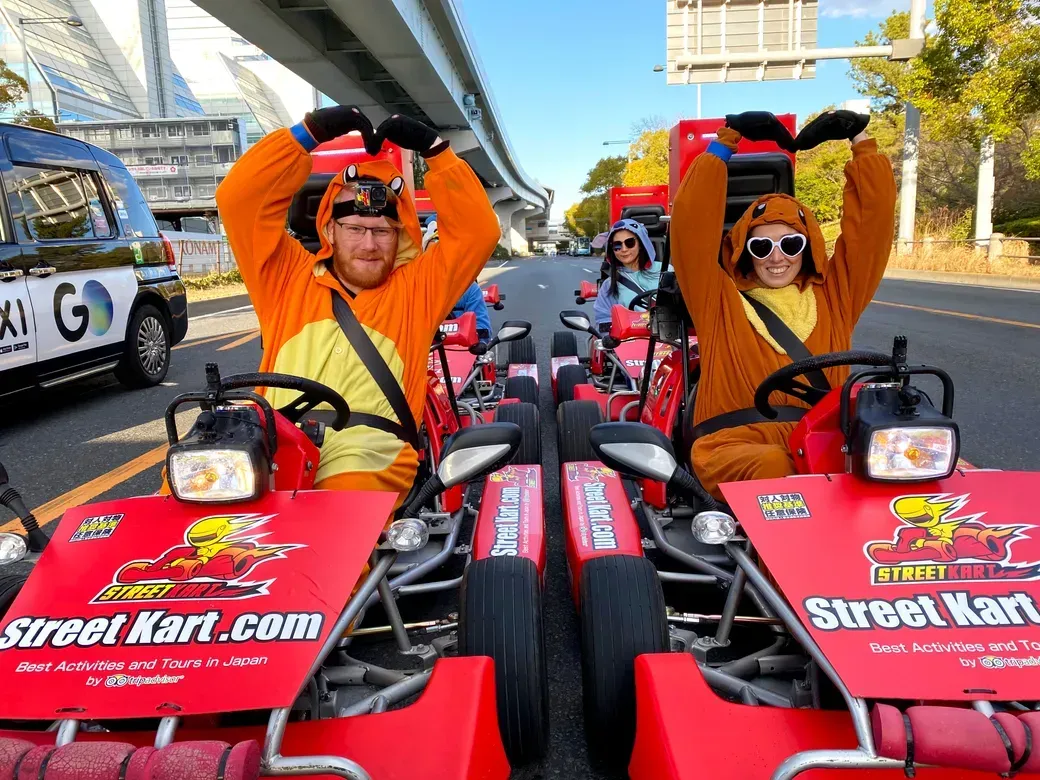
Street Kart tours have a guide leading the way as you cruise through Tokyo’s iconic spots in go-karts on actual public roads. Routes that pass by Tokyo Tower and offer views of Rainbow Bridge deliver an intensity you just can’t get from a bus or train. Feeling the wind directly on your face while looking up at Tokyo’s skyline from kart-level — that perspective is something only a kart can give you.
Tours run about 1 to 2 hours, and the guides provide solid support throughout, so even if you’re nervous about driving, you can relax and enjoy the ride. Street Kart has racked up over 150,000 tours and welcomed more than 1.34 million customers, with an average rating of 4.9/5.0★ — that’s an insane satisfaction rate. Over 20,000 reviews back up that kind of trust.
The ideal game plan? Hit up a Street Kart tour in the morning, then spend the afternoon on a sushi and seafood crawl. After karting through the city, you’ll have worked up an appetite and gotten a real feel for the neighborhoods — which makes the food adventure even better.
Why People Choose Street Kart
There are some clear reasons Street Kart keeps winning over visitors.
First, guides are specifically trained to lead international drivers. Communication is available in English, and the whole setup is designed so tourists unfamiliar with Japanese traffic rules can ride with confidence. Street Kart was actually the first in the industry to introduce this — you won’t find that level of reassurance anywhere else.
Then there’s the convenience of 6 locations across Tokyo alone. You can pick your starting point based on your hotel or the day’s sightseeing plan, which is a huge perk for travelers. They also have locations in Osaka and Okinawa, so if you’re traveling beyond Tokyo, you can do it all over again in a different city.
The fleet of over 250 vehicles is no joke either. They’ve got the capacity for group bookings, and rolling through Tokyo’s streets with your crew is the kind of memory that sticks with you. Their website supports 22 languages, so booking is a breeze.
But above all, the experience of driving on real public roads is truly one of a kind. This isn’t some amusement park go-kart — it’s the real deal, cutting through actual Tokyo streets with the wind in your face. Drivers in neighboring cars waving at you, pedestrians pulling out their phones for pictures — those little interactions are all part of an experience you can only have in Tokyo.
Check out the official site for details on driver’s license requirements before you go.
A Day Well Spent — The Golden Kart & Sushi Plan
Let’s map out what a perfect day looks like.
Around 9 AM, arrive at Tsukiji Outer Market. It’s still relatively quiet at this hour, so kick things off with a light seafood breakfast. A marinated tuna rice bowl, some freshly grilled scallop skewers — fuel up while soaking in the market’s buzzing energy. Let Tokyo’s morning vibe charge you up.
Head out for a Street Kart tour in the late morning. Spend about 1 to 2 hours blazing through the city. Tokyo Tower, Rainbow Bridge, Odaiba — those views you usually only catch from a train window look completely different from the low vantage point of a kart. The closeness of the asphalt, the towering buildings, the smell of the wind. Every sense is firing on all cylinders.
After the tour, take a quick breather and head to lunch. The post-kart hunger level is perfectly calibrated for going all-in on sushi. Settle into a counter sushi spot in Akasaka or Ginza, chatting with the chef while savoring seasonal specialties. Or keep it casual at a popular conveyor belt place in Shibuya or Shinjuku — totally up to you.
Come evening, loop back to Tsukiji Outer Market or the Tsukishima area for monjayaki and seafood izakaya fare to cap off the night. Tokyo’s seafood game is strong from morning to night, and alternating between “eating” and “experiencing” throughout the day lets you truly feel the depth of this city.
Pro Tips to Level Up Your Tokyo Sushi Experience
Since you’re eating sushi in Tokyo, here are a few things that’ll seriously enhance the experience.
At counter sushi spots, go with “omakase.” Just say the word and the chef will select the best cuts based on that day’s catch — you’ll get to enjoy peak seasonal flavors in their absolute best form. One word is all it takes.
There’s a technique to soy sauce too. Dip just the fish side lightly — drowning the shari (vinegared rice) in soy sauce ruins the whole thing. Gari (pickled ginger) is a palate cleanser, meant to be nibbled between pieces so each new bite tastes crisp and clear.
Seasonal fish in Tokyo varies dramatically throughout the year. Spring brings sayori (halfbeak) and firefly squid, summer means aji (horse mackerel) and sardines, autumn features sanma (pacific saury) and returning bonito, and winter showcases cold-water yellowtail and cod milt. Enjoying what’s only available in that exact season is what makes Tokyo sushi truly special.
Your Tokyo Gourmet Adventure Awaits
Tokyo holds more Michelin stars than any other city on Earth. And within that culinary universe, sushi and seafood reign supreme. The energy of Tsukiji Outer Market, the intimate intensity of counter sushi, the laid-back fun of conveyor belt joints — no matter which style you choose, Tokyo’s seafood never disappoints.
Layer a street kart experience on top of that, and a simple food crawl transforms into a full-blown adventure. Tearing through Tokyo with the wind in your face, then savoring a piece of sushi afterward — that’s the kind of moment that gets etched into your travel memories forever.
Booking Street Kart is easy at kart.st. You can also check out detailed tour info and course options at their site, so definitely look into it when planning your Tokyo trip.
Tokyo sushi, seafood, and street karts. This combo is an experience you can only have in Tokyo. On your next trip, why not spend a day that satisfies both your taste buds and your thirst for adventure? I guarantee it’ll be the kind of day that makes you say, “I have to come back.”
Costume Notice
Please note that we do not offer costumes related to Nintendo or “Mario Kart” for rental. We only provide costumes that respect intellectual property rights.
